In his new book, the neuroscientist shares a simple practice for training your attention to come back to the here and now.

How often have you heard that one of the secrets to a happier life is to “be present”? It sounds simple enough. But between the plans we’re making, the conversations we’re replaying, the worries we’re carrying, and the endless distractions competing for our attention, staying in the here and now can feel anything but simple.
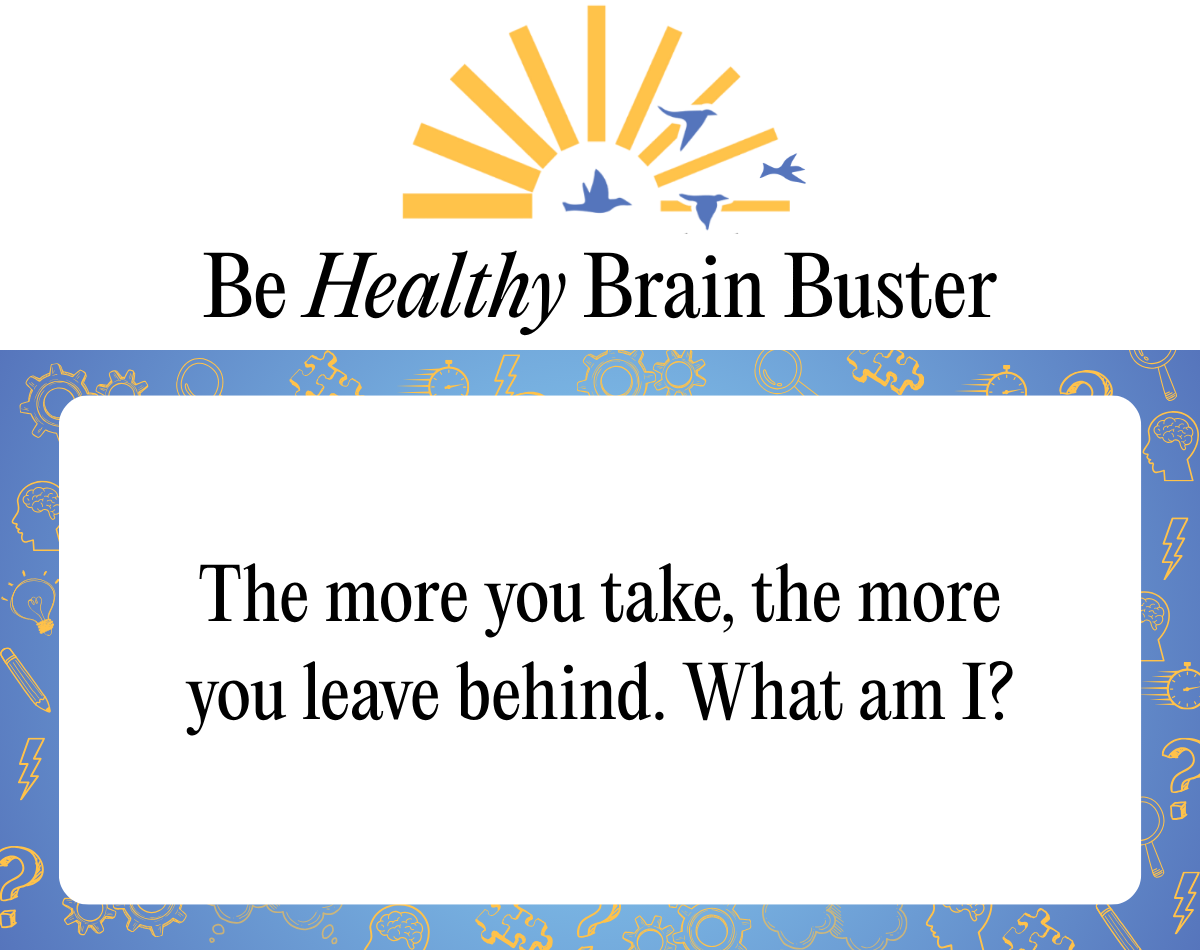
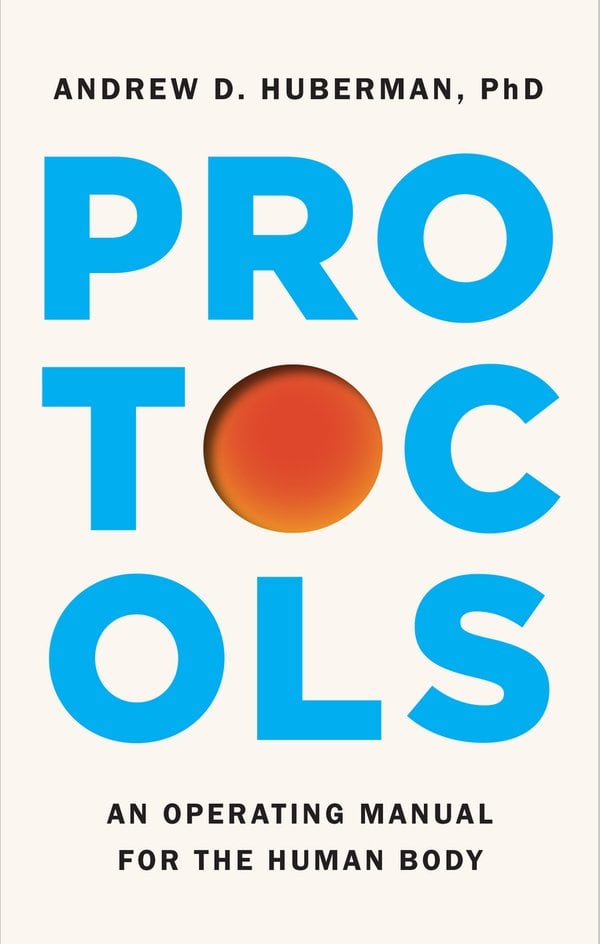
Neuroscientist Andrew Huberman, PhD, has spent years helping millions of people better understand how our brains and bodies work—and, importantly, how we can use that science in our everyday lives. In his new book, Protocols: An Operating Manual for the Human Body, Huberman turns his attention to practical, science-backed strategies designed to support everything from sleep and physical health to focus and emotional well-being.
One of those strategies starts with something all of us have: our attention. And the research Huberman explores offers a fascinating reason to think differently about where we direct it.
In this exclusive excerpt from Protocols, Huberman explains why our wandering minds may have a bigger impact on our happiness than we realize—and why we don’t have to be perfectly present to make a meaningful difference.
Personal Growth Protocol 1: Replace Mind Wandering with Present-Tethered Awareness
A prominent study by Nobel Prize–winning psychologist Daniel Kahneman helped change the way we think about what makes us happy. It found that beyond a certain threshold income level, having more money does not increase happiness. (If you want to know, in 2010 that threshold amount was $75,000 annually—equal to about $110,000 today.) I confess, those results always gave me pause because let’s face it: Money may not buy happiness, but it sure can help buffer against many common forms of stress, some obvious ones being housing, food, and healthcare.
Turns out, there is a rarely mentioned aspect of the Kahneman study that found that more income did not increase daily happiness but it did improve people’s overall sense of life satisfaction. Nevertheless, the notion that money can’t buy happiness stuck around. I would argue one of the reasons for that is because it came at the same time as a rising interest in “mindfulness.” That interest was accompanied by the idea that being “present” to our daily experiences, a mindset long embraced in Eastern traditions, is vital to our well-being. Just as important as material wealth, if not more so.
What Does It Really Mean to “Be Present”?
We now have a lot of data from lab studies and clinical trials showing that our level of “presence” is not just the outcome but a cause of happiness, both in the short and long term. Mindfulness and meditation, both of which are intended to help with being present have been studied for the neural and psychological changes associated with these practices. They are by no means new; they have existed in Eastern cultures for thousands of years, experienced fleeting popularity in the US in the 1970s, and then became trendy again.
Today, mindfulness is a familiar term, and meditation is a common practice. Okay, so we should “be present.” Got it. But the whole “be present” thing is another pretty term. Even for scientists wishing to study our level of presence, defining it is no easy task.
To shift away from catchy phrases like “Be Here Now” (I love that phrase by the way) and run actual experiments, capture data, and suggest actionable tools on the basis of those data, scientists needed to create an operational definition of presence. They also needed to study it in the real world, which is not easy. Such studies were done by a few pioneering scientists to whom we owe a debt of gratitude, such as Richard Davidson, PhD, from the University of Wisconsin–Madison, and Matthew Killingsworth, PhD, and Dan Gilbert, PhD, from Harvard.
Our Minds Wander More Than We Realize
How present are we as we go about our everyday lives? To find out, Killingsworth and Gilbert conducted what is now considered a landmark study in Science. They created an app to collect real-time information on participants’ thoughts and feelings as they went about their day. The app sent question prompts to people at random moments during waking hours, such as, “How are you feeling right now?” and “What are you doing right now?” Every prompt also included the question “Are you thinking about something other than what you’re currently doing?” The researchers amassed a database of nearly 250,000 responses from around 5,000 people ages 18 to 88 from 83 different countries.
Then they dove in. Killingsworth and Gilbert analyzed the responses from 2,250 adults, most from the US, to look for any connections between the specific activity they were doing, their level of presence with that activity, and their mood. Their results showed that for nearly 50 percent of our waking lives, our minds are elsewhere, thinking about times and places and things that have nothing to do with the present. But the researchers also showed the firm connection between presence and happiness. When study participants were focused on specific activities and on their immediate physical surroundings, they were happier. Even when those specific activities were boring or unpleasant, that focus was still a buffer against unhappiness. “A wandering mind is an unhappy mind,” the researchers wrote in a summary of their study.
Why Where Your Mind Goes Matters
But perhaps the most interesting finding from the study was the causative link between mind wandering and unhappiness. When it came to feeling happy, mind wandering was a much bigger deterrent than whatever they were doing. It didn’t even matter what they were thinking about. Being present during a less enjoyable activity seemed to make people happier than daydreaming about pleasant things unrelated to the present activity. When we are focused on the present moment, we are happier. This is the power of present-tethered awareness.
You Don’t Have to Be Perfectly Present to Benefit
While that study has some obvious limitations—for a start, it’s based on subjective self-reports—it is notable for a few reasons. First, it has a real-world context. It drew from large sample sizes. And it has readily implementable findings. It tells us that one of the most powerful determinants of our current and future levels of “happiness” is giving what we are doing as much of our undivided attention as we can. Notice I didn’t say all our attention. Fully focusing 100 percent of our mental attention can happen, and that can be great. But it appears that the mere act of periodically devoting a bit more of your attention to the present can be of meaningful benefit to your level of happiness. The data tell us that striving to anchor your thoughts to the present forms the scaffolding of your well-being. So if you’d like to be happy, and you want your children to be happy, find ways to practice present-tethered awareness alone or together.
How to Be More Present
- Throughout your day, periodically ask yourself if your thoughts are focused on the present. For example: “Are my thoughts focused on what I am doing and where I am, or are they related to the past or future?” Be honest in your response.
- If your thoughts are elsewhere, re-tether them to the present. Ask questions anchored in your current surroundings, such as these: “How cold or warm is it in this room? What does it smell like? How many people in line in front of me are on their phone?” That seemingly trivial line of inquiry returns your perceptions to the present because they can only be answered right here and now.
We’d love to hear from you: How easy—or difficult—is it for you to stay present in your everyday life? Have you found a practice that helps bring your attention back to the here and now? Share your experience in the comments below.