Most retired Boeing 747s spend their final years in aircraft graveyards, stripped for parts before disappearing into history. However, one former Malaysia Airlines jumbo jet received a far more extraordinary farewell. Bahrain purchased the aging aircraft, spent months transforming it into an environmentally safe artificial reef, painted it to resemble the very first Boeing 747 ever built, then deliberately lowered it onto the seabed. Today, instead of carrying passengers across continents, it welcomes divers from around the world as the largest aircraft ever to be intentionally submerged.
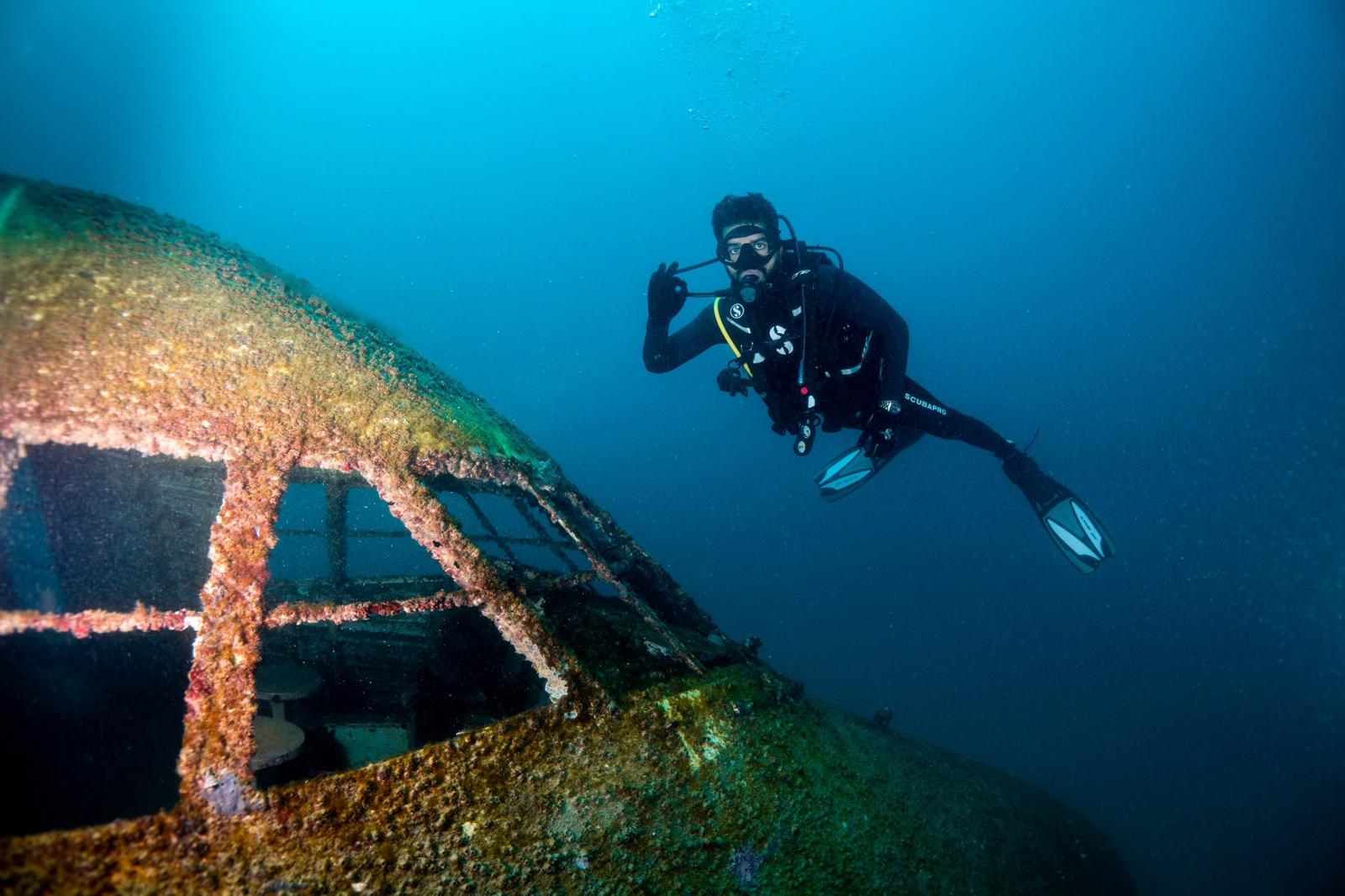
The Boeing 747 became the centerpiece of Dive Bahrain, a 100,000-square-meter underwater attraction that the kingdom describes as the world’s largest underwater theme park. Officially inaugurated on September 6, 2019, by Bahrain’s Minister of Industry, Commerce and Tourism, Zayed bin Rashid Al Zayani, and Supreme Council for Environment chief Dr. Mohammed Mubarak Bin Daina, the site opened to the public the following day after the officials completed the inaugural dive to inspect the submerged aircraft, as reported by Gulf News.
A remarkable second life for a globe-trotting jumbo
The aircraft’s story stretches back more than four decades. Manufacturer’s serial number 22442 was originally built against a British Airways order and allocated the registration G-BDXN, although the airline never accepted delivery. Instead, the Boeing 747-236B entered service with Malaysia Airlines as 9M-MHJ on April 8, 1982, later joining the carrier’s MASkargo freight division in 1997. After retiring in 2005, it briefly flew for Florida-based Focus Air Cargo as N361FC before joining Air Atlanta Icelandic as TF-AAA in 2008, where it was leased back to MASkargo. Its flying career finally came to an end in May 2013, when it was parked in storage at Fujairah in the United Arab Emirates.
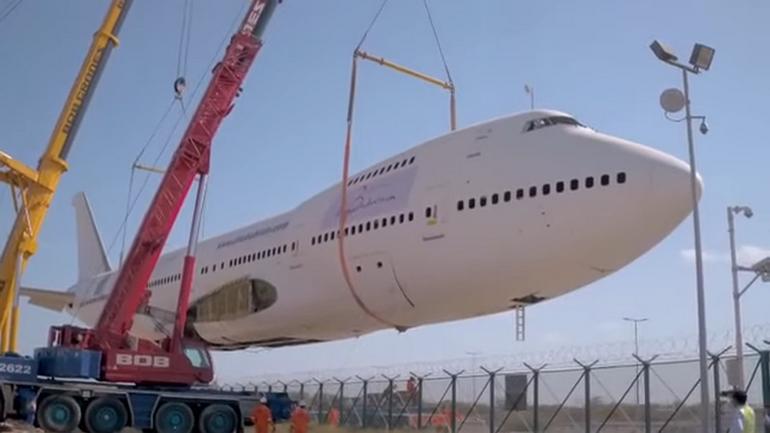
Bahrain reportedly acquired the retired jumbo from the UAE for about $100,000, although that figure covered only the aircraft itself. The much greater expense came afterward. For roughly eight months, specialists painstakingly prepared the 747 for its unusual new purpose. Fuel, hydraulic and pneumatic systems were removed, along with wiring, insulation, plastics, rubber, adhesives and other materials that could contaminate the sea. According to project accounts confirmed by diving organizations involved with the site, every single nut and bolt was removed, individually cleaned of oil residue and then reinstalled before the aircraft was declared safe to become an artificial reef.
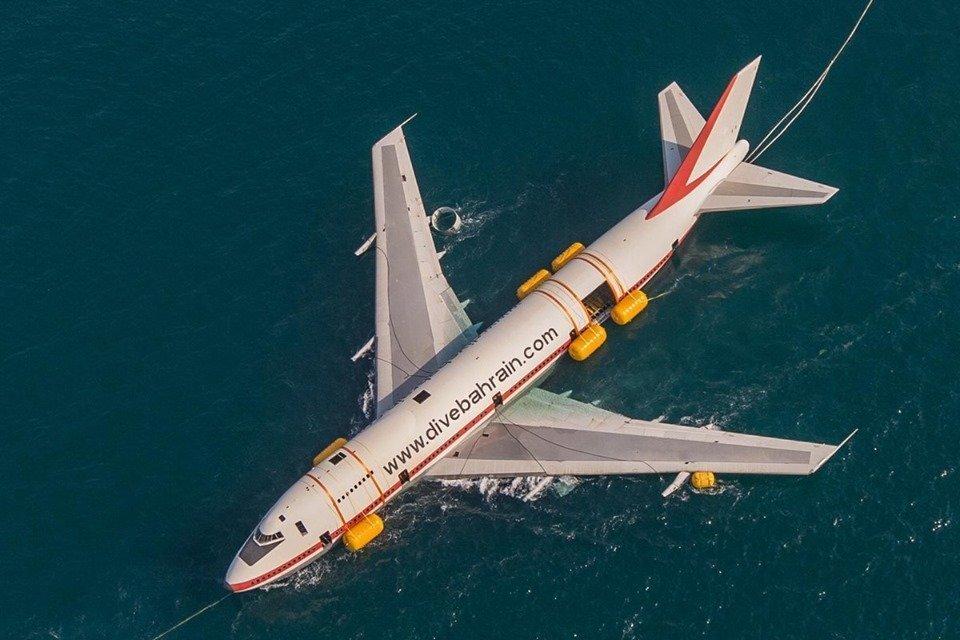
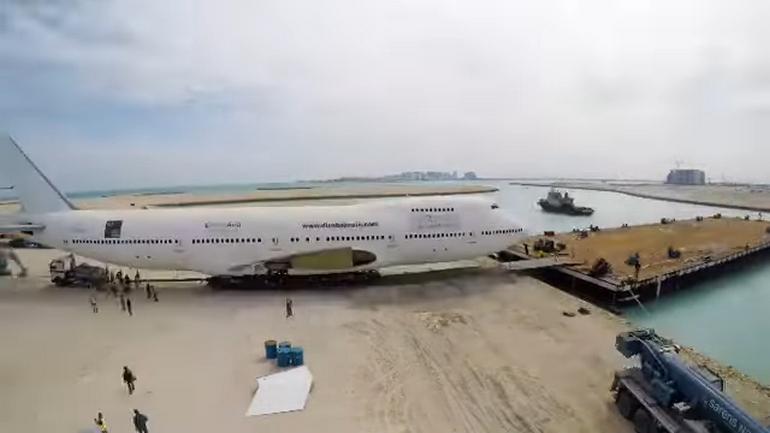
The engineering challenge continued long after the cleaning was complete. The wings were removed so the fuselage could travel by road from Fujairah Airport to the port, a journey so unusual that social media briefly filled with rumors claiming a jumbo jet had made an emergency landing on the city’s waterfront. Local authorities eventually clarified that the aircraft was simply on its way to a very different destination. Once at the port, specialists reattached the wings using techniques modeled on the original manufacturing process before the aircraft was shipped to Bahrain.
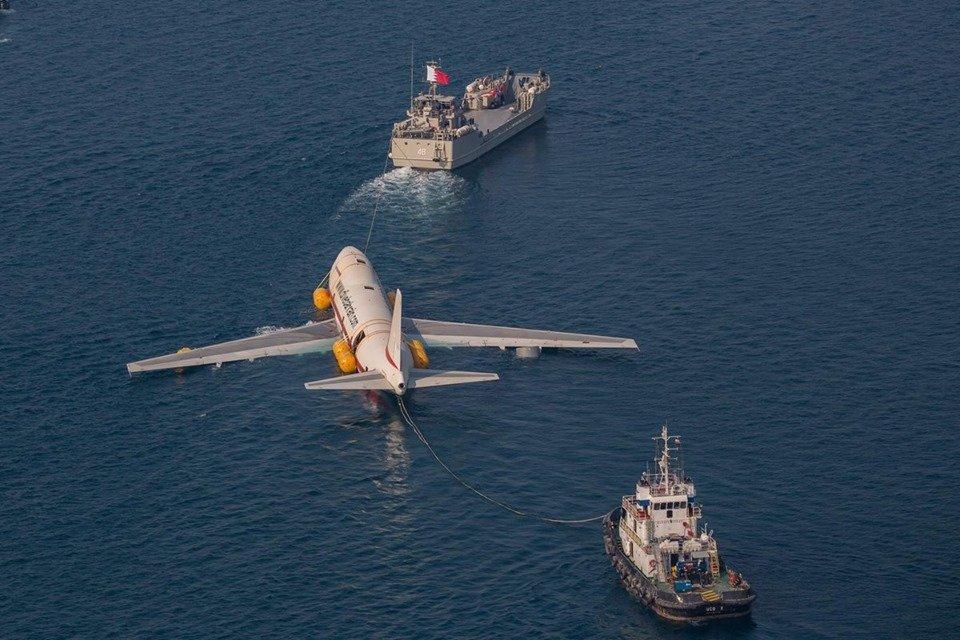
Built to disappear beneath the sea and come back to life
Before its final voyage, the aircraft received one last cosmetic transformation. Rather than preserving its cargo operator’s colors, it was repainted in a lookalike version of Boeing’s famous house livery worn by the original 1969 747 prototype, the City of Everett. It is an understated but fitting tribute, leaving the aircraft on the seabed dressed as the world’s first jumbo jet.
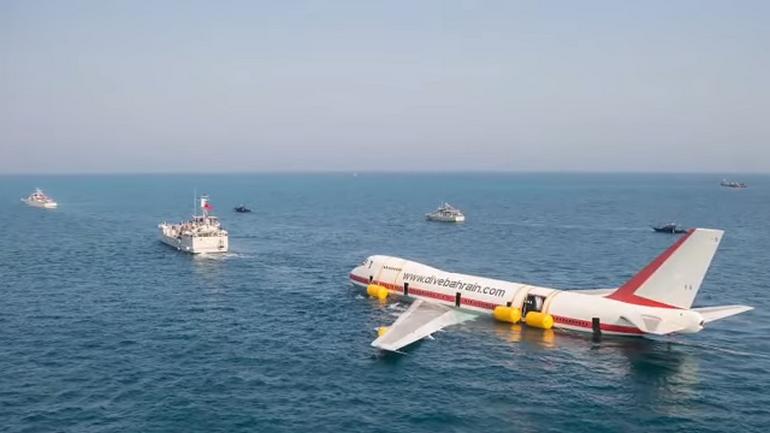
The final operation was as carefully choreographed as the preparation. After being towed for about 20 hours to a site roughly 18 miles north of the Amwaj Islands, close to Bahrain International Airport, engineers attached flotation equipment and gradually lowered the aircraft through controlled deflation rather than simply dropping it into the sea. The process reportedly took about two days. Today the 70-meter aircraft rests 20 to 24 meters below the surface, positioned with its nose slightly higher than the tail so less experienced divers can explore the forward fuselage more easily.
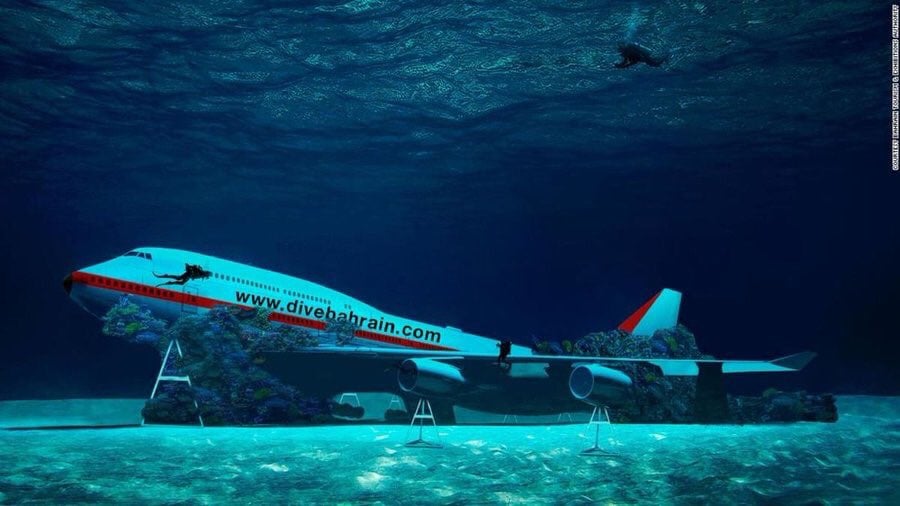
The Boeing is only one part of the underwater park. Dive Bahrain also includes a 900-square-meter replica of a traditional Bahraini pearl merchant’s house, sponsored by Diyar Al Muharraq, alongside sail structures, artificial reef sculptures and coral nursery experiments designed to encourage marine life.
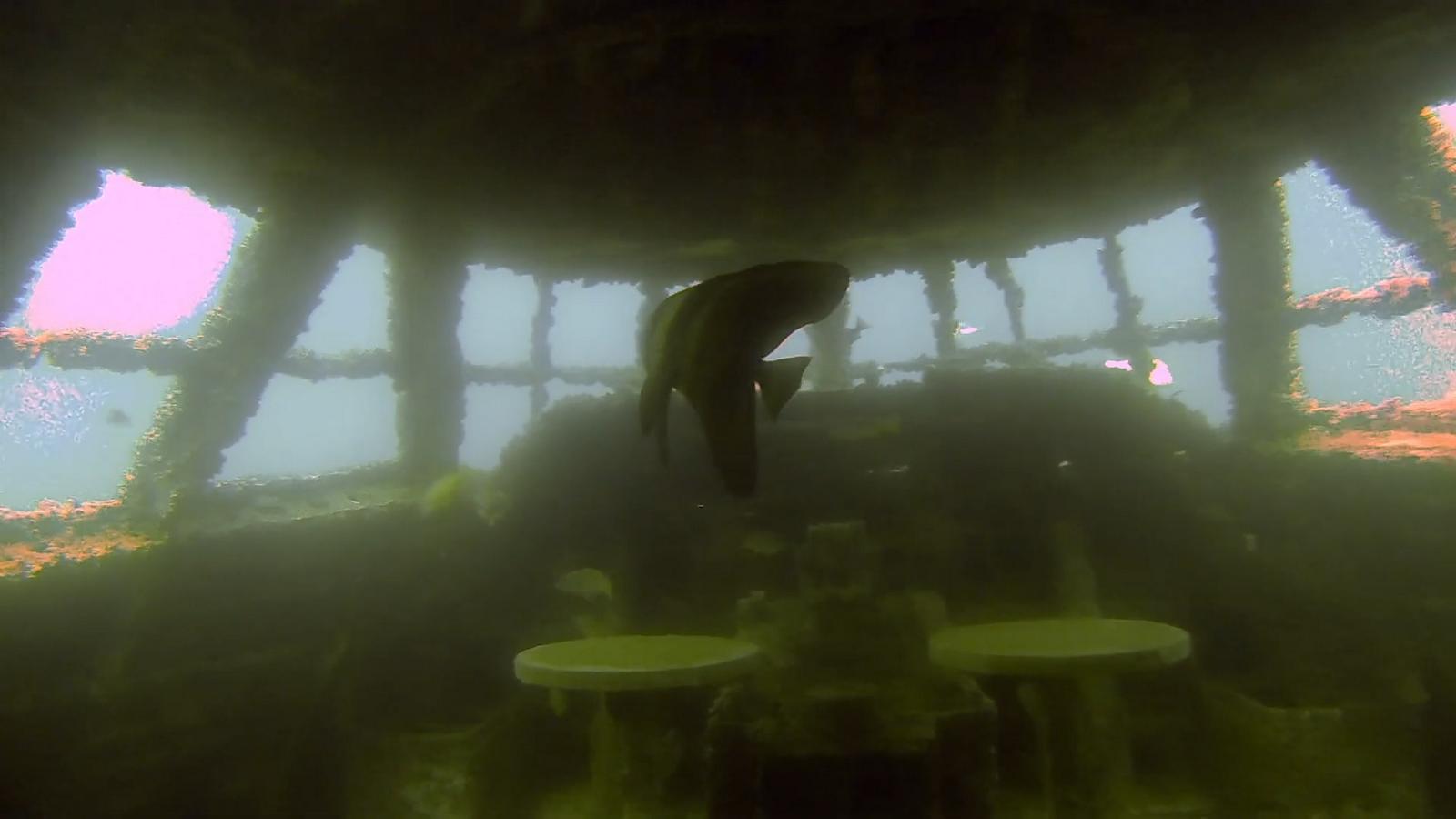
Conceived as both a tourist attraction and a living laboratory, the project follows international environmental standards while giving researchers a place to study coral growth and marine ecosystems.
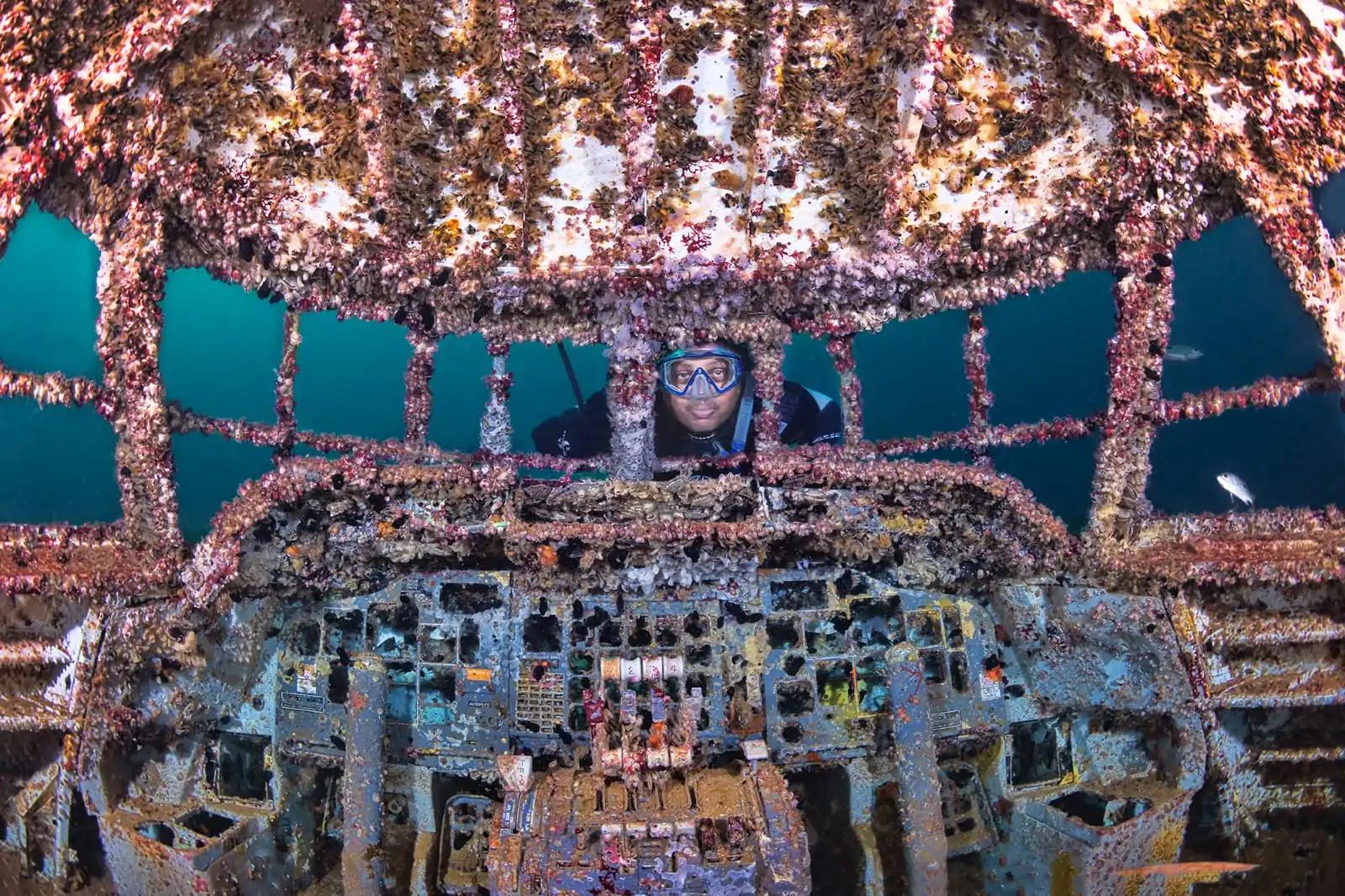
It is an unlikely second act for an aircraft that once linked cities across Asia and beyond. Instead of crossing oceans through the sky, the former Malaysia Airlines Boeing 747 now lies beneath the waters of the Arabian Gulf, where coral slowly covers its fuselage and schools of fish weave through cabins that once carried travelers. Few airliners have ever received a farewell quite so spectacular.