On September 11, Amazon Prime released The Revolutionaries, a web series based on economist and historian Sanjeev Sanyal’s 2023 bestseller, Revolutionaries: The Other Story of How India Won Its Freedom. The series explores lesser-known episodes of India’s militant nationalist movement, including the Delhi Conspiracy Case of 1912, the transnational Indo-German Conspiracy (1914-1917), the Battle of Buribalam (1915) and the Rodda Company arms heist (1914), bringing some of the forgotten revolutionaries and episodes back into public conversation.
Although these events unfolded in different parts of the country, they were connected by a broader network of revolutionaries spread across cities including Lahore, Amritsar, Ambala, Delhi, Dehradun, Benaras, Calcutta, Chandernagore and Balasore.
In an interview with the oral history project Agnijug Archive, Sanyal spoke about how both sides of his family had been involved in the freedom struggle, and how his book was, in part, an effort to document his family’s lesser-known history.
“On my father’s side of the family, many of them were involved in revolutionary activities with the Anushilan Samiti, Ghadar movement, and were acquaintances of Rash Behari Bose,” he says.
Sanyal’s is one of more than 70 family stories Agnijug Archive has recorded since its inception in July 2022.
Tragic, brave but always humane, these stories put a human face to the names and events that have gathered dust in archives. Here are some of the personal stories shared by the families of the real-life revolutionaries portrayed in The Revolutionaries.
The birth of Bengal’s Revolutionary Movement
The advent of the revolutionary political movement in India can be traced to 1902, with the creation of the secret society Anushilan Samiti in Calcutta. What began as physical education and gymnasium clubs soon became a hub of anti-British revolutionary activities.
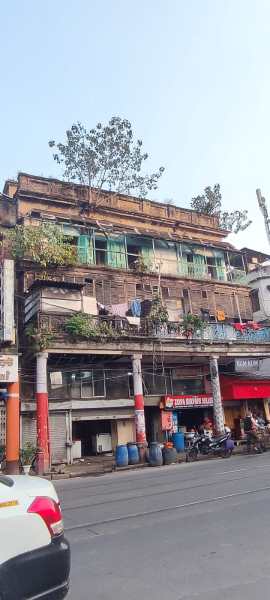 The Anushilan Samiti Headquarters of Calcutta, as it stands now. (Photo Courtesy: Agnijug Archive)
After Sri Aurobindo and his younger brother Barin Ghosh returned to Calcutta from Baroda following the Partition of Bengal in 1905, the Maniktala Secret Society was founded under Barin’s leadership. Unlike Sri Aurobindo, who advocated building the capacity to organise a violent armed uprising against the Empire, Barin believed in targeted assassinations.
The first phase of the revolutionary uprising, which began in 1906, saw several attempts to assassinate British officials and the first use of bombs. It reached a climax with the Alipore Bomb Trials (1908-09). The first phase of armed resistance in Bengal subsequently waned as many nationalist leaders were arrested and imprisoned in connection with the case.
Rash Behari Bose, the master of disguise
Rash Behari Bose, introduced in The Revolutionaries as a ‘beheroopiya’ (master of disguise), was a man who lived many lives. Growing up in the French colony of Chandernagore in the Hooghly district of the erstwhile Bengal Presidency, Bose was initiated into revolutionary politics at Dupleix College by its principal, Charu Chandra Roy, during 1903-04.
He was known for masterminding the 1912 Delhi-Lahore Conspiracy to assassinate Viceroy Lord Hardinge, and for his involvement in the 1915 Ghadar Conspiracy.
Speaking to Agnijug Archive, Indrani Basu, Bose’s niece, shares an anecdote about the aftermath of the Delhi Conspiracy of 1912, spearheaded by Bose. At the time, Bose was working as a head clerk at the Forest Research Institute in Dehradun. To avoid suspicion, he quickly slipped back to the institute, taking the night train from Delhi on the evening of the attack.
Indrani recounted how, on reaching the institute, Bose spearheaded a meeting condemning the attack on the Viceroy. “Further, when Lord Hardinge had moved to Dehradun for his recovery, Bose had even greeted the Viceroy with a bouquet, wished him get-well-soon messages, and prayed for his speedy recovery,” she said.
In 1915, Bose and Jatindranath Mukherjee, a founding member of Anushilan Samiti and Jugantar, secret societies that promoted armed revolution in Bengal, organised the Ghadar Mutiny, aimed at inciting a pan-India mutiny in the British Indian Army. During this period, several other secret societies emerged, including the Bengal Volunteers.
There was another anecdote from Bose’s years on the run. During a police raid on his hideout between 1914 and 1915, a servant opened the door and politely asked the officers to wait while he fetched the master of the house. After waiting in vain, the police stormed inside, only to find an empty home. The ‘servant’ who had casually greeted them was Bose himself, already long gone.
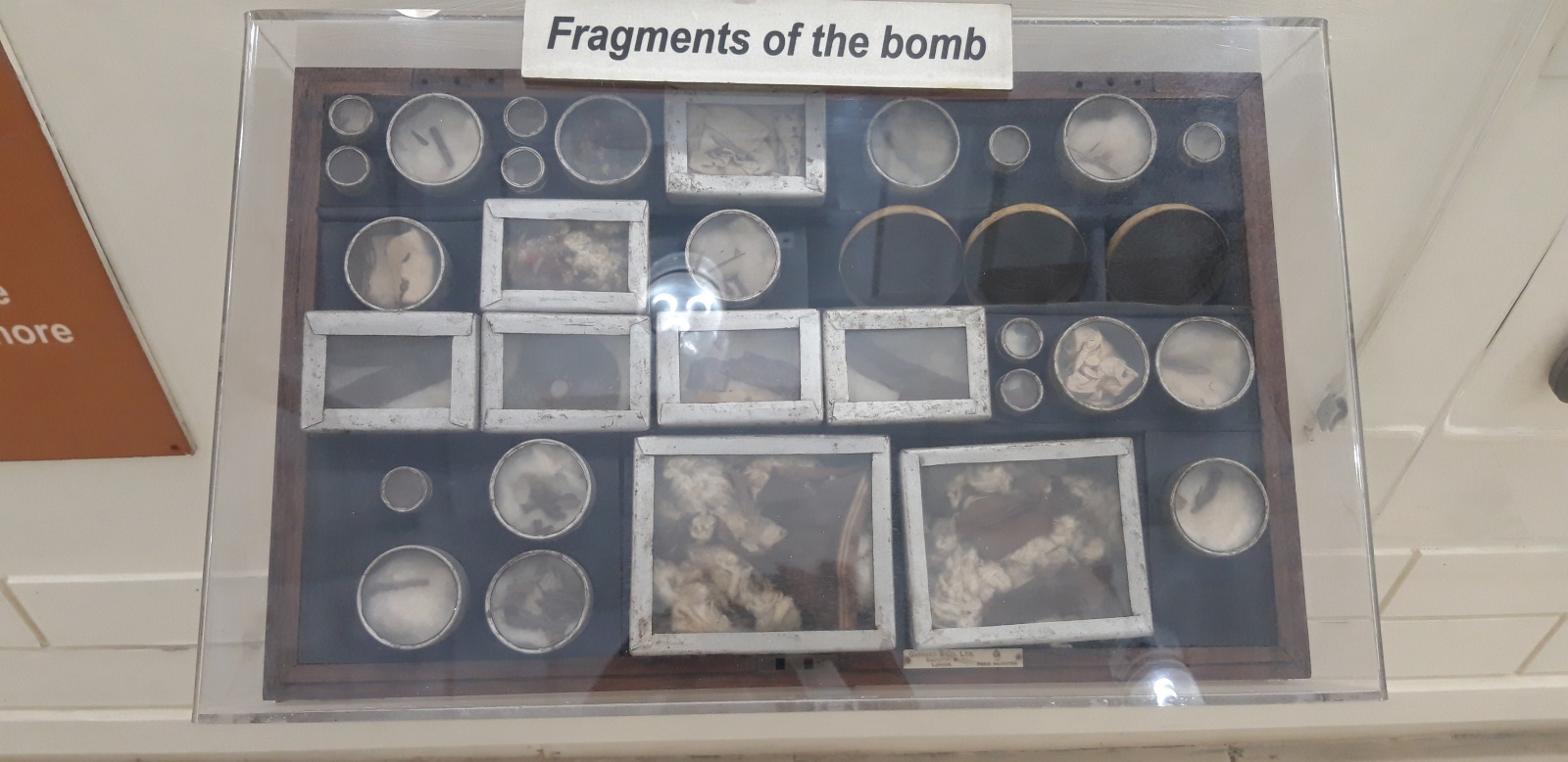 Fragments of bomb from the Delhi Conspiracy Case preserved at the Kolkata Police Museum. (Photo Courtesy: Agnijug Archive)
Bose later left for Japan in 1915, where he spent the rest of his life in exile. He played an instrumental role in the formation of the Indian National Army in Japan during the early 1940s.
Basanta Biswas and a fatal homecoming
Basanta Biswas was Bose’s comrade-in-arms and the revolutionary who threw the bomb at Lord Hardinge in 1912. Bose and Biswas were acquaintances, and the latter had been handpicked and trained by Bose for the attack on Viceroy Lord Hardinge. The two had also been together on the day of the attack in Delhi.
Tarun Biswas, a descendant of Basanta Biswas, challenges a detail entrenched in popular retellings of the 1912 attempt on the Viceroy, including its depiction in The Revolutionaries. The show depicts Basanta throwing the bomb at Hardinge from a Chandni Chowk rooftop while disguised as a woman. According to the family’s account, however, Bose changed the plan at the last moment.
Basanta had been trained to throw the bomb upwards, from a lower to a higher position. While the original plan required him to disguise himself as a woman to enter the courtyard reserved for women, Bose ultimately instructed him to change back into male clothing and throw the bomb from below.
Tarun also speaks of a betrayal that altered the course of his family’s history.
After nearly two years in hiding, 19-year-old Basanta secretly returned to his family home in Nadia on February 5, 1914, after learning of his father’s death. His return would lead to his arrest and, ultimately, his execution by hanging.
“Basanta had come home to perform his father’s last rites, and had travelled to his uncle’s house nearby to buy some materials required for the sraddha. There, his uncle’s relative, a certain Promothonath Biswas, a government servant eyeing a lucrative promotion, spotted Basanta and quietly reported his presence to the local police station.
“Basanta’s cousin and fellow revolutionary Manmatha Biswas, on getting a whiff of the impending police arrival, tried to warn Basanta and aid his escape, but it was too late. He was arrested two days before he could perform his father’s sraddha”, says Tarun.
Basanta was hanged at Ambala on May 11, 1915, aged 20. Despite repeated requests, his body was never returned to his family for the last rites.
Waiting for Jatin
When the First World War broke out, revolutionaries of the Jugantar group sought to procure arms from Europe and use them to overthrow British rule in India. The plan, known as the Indo-German Conspiracy, was developed with the support of the Berlin Committee in Germany and revolutionaries operating in India.
Jatindranath Mukherjee was one of Bose’s co-conspirators in the plot. The two also worked closely within the wider revolutionary network, with Bose coordinating efforts with secret societies across North India.
The Indo-German Conspiracy ultimately failed after some conspirators acted as police informers and revealed the plan to the British authorities. The ammunition the revolutionaries were expecting never reached them. Jatindranath was killed in a frontal battle with the police in Balasore, Odisha, during the Battle of Buribalam in September 1915, and Jugantar lost one of its most prominent leaders.
Despite this setback, revolutionaries continued trying to arrange weapons through the eastern Indian route via China and Assam under the leadership of Jadugopal Mukherjee, Jatindranath’s erstwhile foreign secretary and the man in charge of the group’s transnational dealings.
While the world remembers the bravado of Jatindranath, his granddaughter Manjusha Chatterjee remembers the price his family paid for it. When he died, he left behind a young widow and three children, aged two-and-a-half, five, and seven. But the sacrifices at home had begun long before his death.
“My Dadu (grandfather) would give away all of his monthly salary to the revolutionaries for nationalist activities,” Manjusha recalls. “So much so that, most months, my grandma Indubala had barely enough money to buy food for the family.
“Slowly, his fellow revolutionaries learnt of this precarious situation at home and decided to take matters into their own hands. On a particular payday, a friend approached Jatin and cried to him about a family member’s illness, saying he urgently needed money. Jatin gave away his entire salary, keeping only the money needed for the tram ride home. When he returned home empty-handed, the friend was already there. He smiled and said he had given the salary directly to Indubala, reprimanding Jatin that his generosity was becoming a cause for his family’s starvation.”
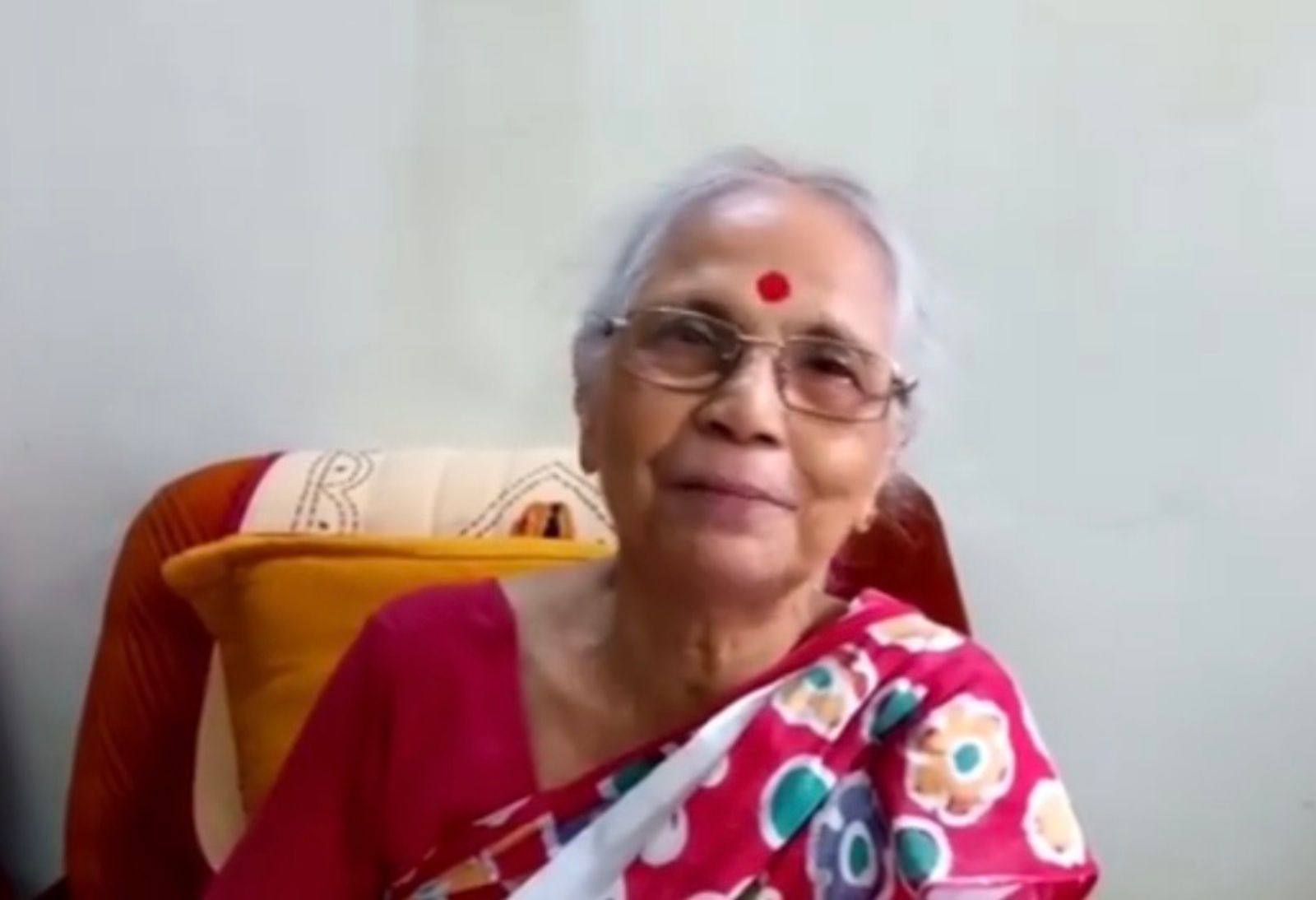 Manjusha Chatterjee, Granddaughter of Bagha Jatin. (Photo Courtesy: Agnijug Archive)
Manjusha recalls how Jatindranath’s death in 1915 left Indubala suspended between grief and hope. On hearing the news, she refused to believe that her husband was dead. Their family guru, Bholananda Giri, comforted her with the assurance that Jatindranath was alive and would one day return.
Indubala held on to those words for the rest of her life. Until her death in 1937, she continued to dress as a married woman, wearing sindoor and the sankha-pola (conch-shell bangles), as though Jatin had never left.
The inheritance of revolution
Sachindranath Sanyal was another prominent revolutionary of the period. Born in Varanasi into a Bengali family, he founded a branch of the revolutionary Anushilan Samiti in Patna in 1913 and took part in the Delhi Conspiracy against Viceroy Hardinge. He later played a role in planning the 1915 Ghadar Mutiny.
After Bose fled to Japan, Sachindranath emerged as one of the movement’s senior figures, mentoring younger revolutionaries including Chandrashekhar Azad and Bhagat Singh.
The mutiny formed part of the broader Indo-German Conspiracy, which saw members of the Ghadar Party return from North America to Punjab to foment an anti-British uprising. The revolutionaries sought to coordinate a pan-Indian mutiny within the British-Indian Army in February 1915. Sachindranath played a key role in connecting revolutionary networks in eastern India with those in the north.
In 1924, he co-founded the Hindustan Republican Association (later HSRA) to pursue armed resistance against British rule. Convicted in the Banaras Conspiracy case (1917) and Kakori Conspiracy case (1925), Sachindranath was one of the few revolutionaries to be transported twice to the Cellular Jail in the Andamans, where he wrote his memoir, Bandi Jeevan. He died of tuberculosis in Gorakhpur jail in 1942.
Recalling Sachindranath’s role in the freedom struggle, his nephew Surajit Sanyal says their family home in Madanpura, Uttar Pradesh, was often frequented by revolutionaries like Sri Aurobindo even in the early years of armed struggle.
Sachindranath travelled to Calcutta to hand over money looted during the Kakori Robbery to barrister-politician and freedom fighter Chittaranjan Das, to support the then-young Subhas Chandra Bose’s dream of raising an army against the British.
Emphasising how the networks of secret societies operated across generations and regions, Surajit says Sachindranath not only inspired his brothers, all of whom became revolutionaries, but also helped raise Bhagat Singh as his political protégé.
Humanising the heroes
More than a century later, the stories of these revolutionaries reveal a dimension of India’s freedom struggle that is often overshadowed by better-known narratives of the nationalist movement.
Their lives demonstrate that the revolutionary struggle was not limited to isolated acts of violence or individual heroism. It was sustained by extensive networks of families, friends, sympathisers and ordinary people who took enormous personal risks.
As The Revolutionaries brings some of these forgotten figures back into public conversation, their descendants offer another way of understanding that history: through ordinary people who transcended extraordinary obstacles, and through the families who continued to live with the personal costs of the struggle for India’s freedom.
The writers are co-founders of the Agnijug Archive.