The possibility of Hardik Pandya moving from the Mumbai Indians to the Chennai Super Kings has opened the door to what could become one of the IPL’s most consequential trades.
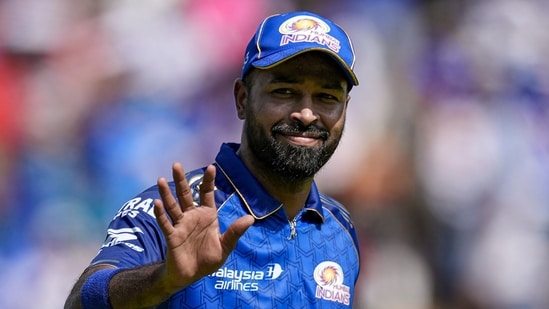
The latest speculation has thrown up two possible constructions. Mumbai Indians are understood to want Shivam Dube and Ayush Mhatre in exchange for Hardik, while another version of the negotiations has CSK unwilling to part with Mhatre and instead offering Dube, Dewald Brevis and an additional ₹10 crore.
Neither franchise has confirmed a deal, but the reported packages offer an intriguing exercise in valuation. Hardik remains one of the rarest commodities in Indian cricket: a middle-order batter capable of bowling seam, filling a leadership role and offering enormous flexibility without occupying an overseas slot.
But trades are ultimately about what each side gives up against what it receives.
And once IPL 2026 performances, acquisition prices, age profiles and positional value are placed alongside each other, the two proposed deals begin to look heavily tilted towards the Mumbai Indians.
Hardik Pandya’s price is currently being driven by profile, not production
Hardik‘s reputation inevitably carries a premium. There are very few Indian players capable of batting at No.5 or No.6 and providing genuine pace-bowling overs, and that scarcity alone makes him more valuable than a conventional comparison of runs and wickets would suggest.
His IPL 2026 numbers, however, do not resemble those of a player commanding a blockbuster trade package. Hardik scored 206 runs at an average of 22.89 and a strike rate of 138.26. He did not make a fifty, while his returns at the death were particularly modest for a player expected to provide late-innings acceleration: 49 runs from 37 balls at a strike rate of 132.4.
His bowling was an even bigger concern. Hardik took only four wickets from 22.4 overs and conceded 11.43 runs per over. His economy rose to 15.75 at the death, while he conceded 13.75 per over in the powerplay. His most effective period was between overs 12 and 16, where his economy dropped to 7.80.
Based on batting and bowling output, Hardik’s adjusted IPL 2026 performance value comes to approximately ₹4.10 crore. Adding a ₹1 crore captaincy component takes his overall contribution to around ₹5.10 crore.
That sits against a price point of ₹16.35 crore. The gap is significant.
It does not mean Hardik’s actual market value is ₹5.10 crore. IPL valuations cannot be reduced to one season’s production. Role scarcity, leadership, Indian-player status and future potential all matter. What it does show is that CSK would be paying for a Hardik rebound rather than paying for what he delivered in 2026. That distinction should dictate how far they are willing to go.
Dube and Mhatre for Hardik: Mumbai Indians would profit heavily
The first proposed package is the easiest to evaluate.
Shivam Dube had the better IPL 2026 with the bat. He scored 270 runs at an average of 38.57 and a strike rate of 158.82, significantly outperforming Hardik across all three measures. Dube was especially destructive at the death, where he scored 120 runs from 66 balls at a strike rate of 181.8. His value through the middle overs was also evident. Between overs seven and 11, Dube struck at 172.3, scoring 81 from 47 deliveries. His bowling contribution was negligible — one wicket with an economy rate of 12.80 – but CSK have primarily used him as a specialist power-hitter.
Dube’s adjusted performance value for IPL 2026 comes to approximately ₹7.68 crore against his ₹12 crore price. That still represents an under-return on price, but it is considerably healthier than Hardik’s.
Then comes Ayush Mhatre. Mhatre’s season lasted only six innings, yet he produced 201 runs at an average of 40.20 and an extraordinary strike rate of 179.46. He hit 20 fours and 12 sixes from only 112 deliveries – effectively one boundary every 3.5 balls.
More importantly, his aggression survived beyond the powerplay. Mhatre struck at 184.9 during the first six overs, 171.9 between overs seven and 11 and 191.3 between overs 12 and 16.
For a 19-year-old Indian top-order batter, that is an extremely valuable profile. His adjusted performance value sits at approximately ₹7.12 crore. His season price is only ₹30 lakh.
Even if his full ₹30 lakh price is used rather than a prorated cost based on appearances, Mhatre produced a model surplus of approximately ₹6.82 crore.
That is the central problem with the first trade. Dube and Mhatre together generated approximately ₹14.80 crore worth of adjusted IPL 2026 performance in our model. Hardik, including his captaincy contribution, generated approximately ₹5.10 crore.
On recent production alone, the Mumbai Indians would therefore receive roughly ₹9.70 crore more modelled value than they give up. The price structure strengthens MI’s position further.
Dube and Mhatre cost a combined ₹12.30 crore. Hardik costs ₹16.35 crore. Mumbai would be moving one expensive 32-year-old player for a proven Indian middle-order hitter and one of the most exciting young Indian batting assets in the competition, with the incoming pair still costing ₹4.05 crore less than Hardik.
That is an enormous win for MI. For CSK, it is extremely difficult to justify.
Mhatre makes the first proposal a deal CSK should reject
Mhatre should not be viewed merely through the 201 runs he scored in 2026. His age and price point radically change the trade equation.
Hardik is 32 and already carries a ₹16.35 crore valuation. Mhatre is 19 and costs ₹30 lakh. CSK would therefore not simply be exchanging present-day production for an established superstar. They would be giving Mumbai a potentially decade-long Indian top-order asset whose cost remains extraordinarily low relative to his early output.
That is exactly the type of player MI should demand. It is also exactly the type of player CSK should refuse to surrender.
Hardik may still be the superior cricketer today. He certainly offers a skill set Mhatre cannot replicate. But trades are not decided solely by identifying the best player involved.
They are about asset value, age, cost, future control and replacement difficulty. Through that lens, Dube plus Mhatre for Hardik is a substantial Mumbai Indians profit and a clear Chennai Super Kings loss.
Dube, Brevis and ₹10 crore: closer, but still an MI-favoured trade
Replacing Mhatre with Dewald Brevis makes the second reported package far more reasonable for Chennai. But the additional ₹10 crore swings the balance towards Mumbai again.
Brevis endured a disappointing IPL 2026 with the bat. He scored 151 runs at an average of 18.88 and a strike rate of 127.97. There were isolated flashes – including scores of 41 and 44 – but the explosiveness expected from him rarely appeared consistently.
His phase numbers reinforce that assessment. Brevis struck at only 50 in the powerplay, 126.4 between overs seven and 11, 141.7 between overs 12 and 16 and 118.2 at the death. His adjusted IPL 2026 value drops to approximately ₹2.73 crore. His price, however, is only ₹2.20 crore. That means even after a poor batting season, Brevis still marginally outperformed his acquisition cost in the model.
And at 23, the attraction is obvious. CSK are not valuing Brevis purely on what happened in 2026. They are valuing the possibility that his future production could be substantially higher while his current price remains low.
Dube and Brevis together generated approximately ₹10.41 crore of adjusted 2026 value. Hardik, including captaincy, sits at approximately ₹5.10 crore. So even before any financial consideration, MI would be gaining about ₹5.31 crore in modelled recent-performance value.
Then comes the additional ₹10 crore. That is where the second proposal becomes difficult for CSK to defend. They would be sacrificing a proven Indian power-hitter, a low-cost 23-year-old overseas batter and significant additional money for a player whose current ₹16.35 crore price already far exceeds his 2026 output.
Mumbai, meanwhile, would spread Hardik’s value across two useful batting assets while gaining further financial flexibility. Again, MI emerge as the stronger side of the transaction.
Why Hardik can still justify an overpay – to a point
There is one reason the numbers cannot settle this discussion completely. Hardik provides something neither Dube nor Brevis can individually replace. At his best, he allows a franchise to play an additional specialist because one Indian player can occupy two roles: middle-order batter and seam bowler. That is enormously valuable in an IPL XI.
A fit Hardik giving CSK three reliable overs per game while batting at a strike rate around 150 changes the balance of their entire side. Chennai could use an overseas slot elsewhere, strengthen their batting or bowling depending on conditions and potentially gain another senior leadership option. That structural value deserves a premium.
CSK should therefore be willing to give Mumbai more than Hardik’s ₹5.10 crore modelled 2026 output would suggest. But there has to be a limit. Dube as the principal trade piece is understandable. Dube plus another secondary asset could still make sense. Even Dube plus Brevis can be defended if CSK believe Hardik will return close to his best, because Indian seam-bowling all-rounders are exceptionally difficult to acquire.
Dube plus Brevis plus ₹10 crore is different. That package effectively prices Hardik as though his 2026 decline never happened. CSK would be assuming the performance risk while simultaneously paying the premium.
Who profits, who loses?
The two possible constructions produce the same winner, but by different margins.
In a Dube-Mhatre trade, the Mumbai Indians profit heavily. The incoming pair produced approximately ₹14.80 crore of adjusted 2026 value compared with Hardik’s ₹5.10 crore including captaincy. Mumbai gain approximately ₹9.70 crore in recent-performance value, lower their combined player cost by ₹4.05 crore and acquire a 19-year-old Indian batter whose upside could extend for the next decade. CSK lose that trade clearly.
The Dube-Brevis- ₹10 crore version is less damaging because Mhatre remains in Chennai. But MI still come out ahead.
Dube and Brevis generated approximately ₹10.41 crore of adjusted value compared with Hardik’s ₹5.10 crore. That already produces an MI advantage of roughly ₹5.31 crore before the additional ₹10 crore is considered. The final judgement, therefore, depends on price rather than the player.
Hardik Pandya makes sense for the Chennai Super Kings. The reported cost does not.
CSK would be justified in paying a premium for one of Indian cricket’s rare genuine seam-bowling all-rounders. What they should not do is price Hardik according to his reputation while ignoring his most recent season.
Dube can form the centrepiece of a rational negotiation. Mhatre should be untouchable. Brevis can enter the conversation, but adding ₹10 crore on top transforms a calculated gamble into an overpayment.
Both reported constructions currently allow the Mumbai Indians to transfer the risk and retain the profit. For Chennai, the smartest trade may therefore depend less on whether they can get Hardik – and more on whether they are disciplined enough to walk away when the price becomes too high.
Method Note: Player values are based on the author’s IPL 2026 valuation model, using batting and bowling performance.