An elderly man sitting under a sprawling banyan tree wisecracks before he shoots directions to Tajpur’s most famous address: the house of Vaibhav Sooryavanshi, the 15-year-old wunderkind who is in the middle of a sensational IPL season with the Rajasthan Royals. “Once upon a time, we saw superstars in big towns, Dilli-Bombay jaisa. Now people from big towns come to our village to see our superstar.” “Chotti Tajpur ka bada raja!” he spins an off-hand moniker.
Around 180 km away, in Gopalganj, Mohammed Ansari stands outside his house, taking in the hot afternoon sun and the glory of his neighbour Sakib Hussain, the Sunrisers Hyderabad player who made his IPL debut this season. Earlier, says Ansari, the town had few visitors. “Only our relatives and, during election time, politicians bothered about us. Or maybe small-time businessmen trying to sell counterfeit goods,” he quips. “But now, people passing through the town stop by to see Sakib’s house, if possible meet his parents and take a selfie.”

Like Vaibhav, Sakib, too, has a moniker tied to his hometown — “Gopalganj ka Rabada”, after South African speedster Kagiso Rabada.
Not just curious passers-by, eagle-eyed IPL scouts too wander the backyards searching for diamonds in the rough. Both Vaibhav and Sakib were catapulted to fame by the IPL, as were Kolkata Knight Riders’ Anukul Roy, Delhi Capitals’ Mukesh Kumar and Sunrisers Hyderabad’s Ishan Kishan. Five players from Bihar in the IPL is a big number for a state cricket association that was nonexistent during India’s IPL revolution last decade.
Tajpur and Gopalganj. Two dissimilar and disconnected places with varied sensibilities and dialects, the distance exaggerated by a tedious transport network, are metaphors of Bihar cricket’s resurgence from its troubled past.
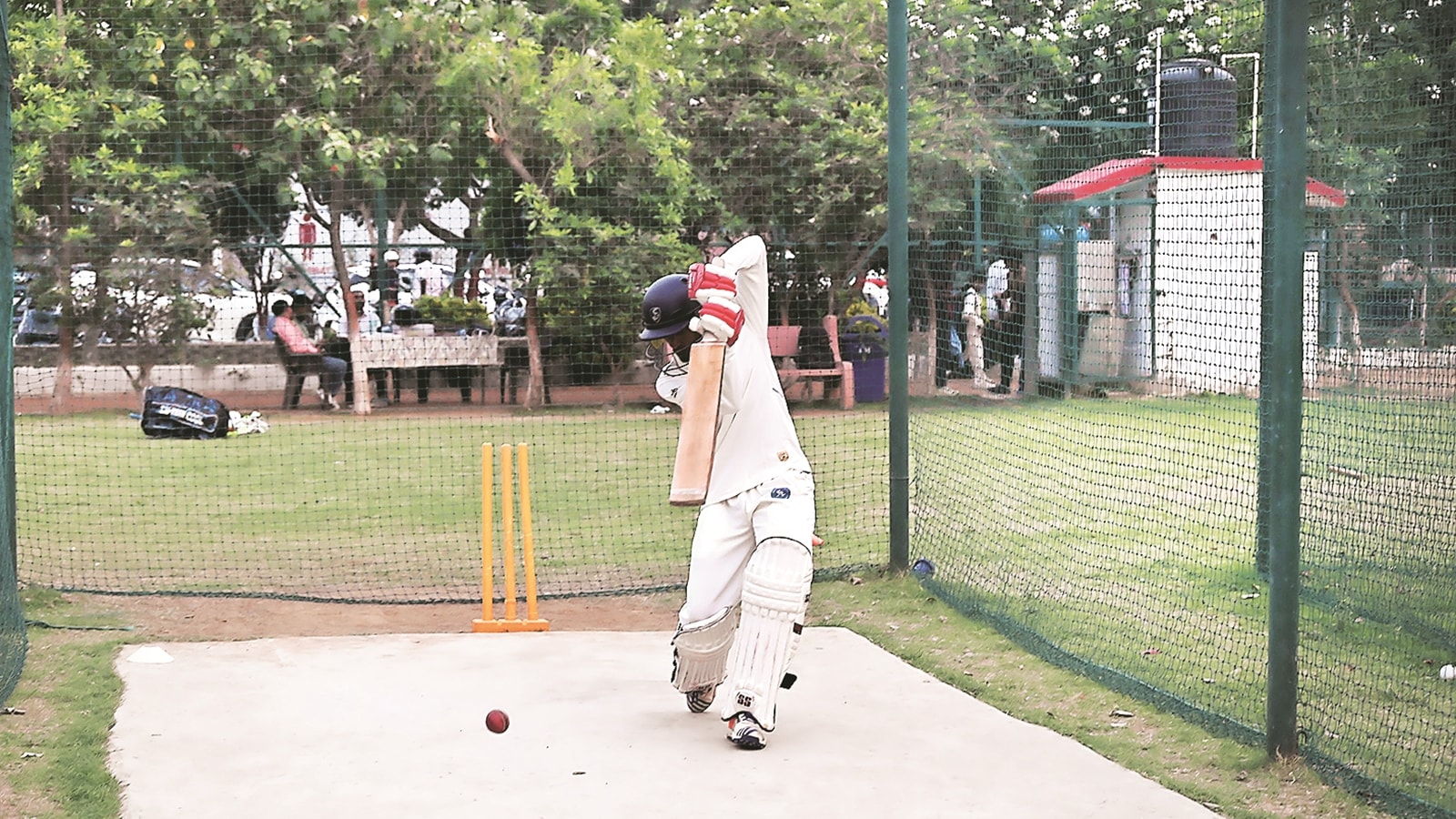 As cricket recaptures the imagination of Bihar’s youth, maybe some day, the lane behind Samastipur’s Patel Field might empty out into the cricket ground where the baby-faced Vaibhav swung his bat for the first time.
‘Bihar, a sleeping giant’
For 15 years, from 2003 to 2018, when the Bihar Cricket Association was suspended for various malpractices and relentless infighting, the state lost a generation of cricketers to both anonymity as well as neighbouring states with better cricket administration.
Story continues below this ad
At the turn of the last decade, Ishan Kishan, raised in Patna, shifted to Jharkhand and became its captain. Medium-pacers Mukesh and Akash Deep, from Gopalganj and Dehri, relocated to Bengal; Anukul, from Samastipur, sought Jharkhand’s greener turfs. But all of them inspired a new generation of cricketers back home in Bihar.
During his early years, Vaibhav travelled 100 kilometres from Tajpur in Samastipur district to Patna every weekend for professional training; Sakib first held a cricket ball in his late teens. Tears were shed as much as sweat.
Sunil Kumar, former cricketer who played for both Bihar and Jharkhand, and who was M S Dhoni’s first captain, says, “You saw what M S Dhoni did to Jharkhand cricket. He made it big soon after the bifurcation, Jharkhand cricket got its poster boy and they became one of the strongest sides in domestic cricket. Now Bihar has quality cricketers like Vaibhav, Sakib, and, of course, Ishan. Their journeys will give hope and belief to thousands of cricketers. At least they can participate in domestic tournaments and get IPL exposure. They needn’t migrate.”
For far too long, migration to bigger cities has been the most recurrent theme in the Bihar story. Every half an hour, thousands cram into the sleeper and general compartments of trains that ferry them to cities in other states. As had Vaibhav’s father when he left for Mumbai at the stroke of the century, during the peak of the alleged jungle raj and Kidnap Inc, when the state was something between a punchline and a cautionary tale.
Story continues below this ad
But now, the rise of Vaibhav and Sakib has suddenly shifted the gaze to the state’s immense but untapped cricketing potential. “A sleeping giant,” as Sunil Kumar puts it.
“In another few years, Indian cricket will witness the full power of Bihar cricket,” says former BCA president and state BJP treasurer Rakesh Kumar Tiwary. His 25-year-old son, Harsh Vardhan, now helms the association.
The stories of the two youngsters have captured public imagination, so much so that the locals talk about them as much as they discuss politics and prohibition. Over cups of jaggery chai and litti, with an IPL game playing on their smartphones, they talk about Vaibhav and Sakib.
Off the ground, an epic battle
Murals depicting themes from the Ramayana are splashed on the walls of Bihar’s railway stations and the airport in Patna. It’s largely done in the Madhubani tradition, with the silhouette outlined with bold double lines and vibrant colours. References from the epic sneak in when the conversation is of consequence. Like when the 15-year-hiatus of the BCA is referred to as “vanvaas (exile)”. Or how, like Ram, Bihar lost its cricketing kingdom.
Story continues below this ad
The hard times began with the state’s bifurcation in 2000, when the cricketing hubs of Jamshedpur and Ranchi went to Jharkhand. “Other states have been bifurcated. But I think Bihar Cricket Association and cricketers from Bihar, post-bifurcation, were given a very raw deal. And I think that is why they missed out on those 15-18 years of cricket,” points out Saba Karim, former India wicketkeeper and the biggest name to have come out of the state in the pre-IPL era.
Tiwary, the former BCA chief, says that when he took over in 2019, the place was in utter disarray. He pulls out an old proverb: “Bina mulk ka baadhsah mila… The emperor had no land to rule. He was just an emperor in name.”
“We had no office, we had issues with registration. There was no infrastructure, no system, nothing. There were problems after problems,” he says, claiming he worked to rid the association of factionalism and nepotism.
“We decided we would only choose players on merit; not go by the surname or position,” he says, adding that they even stitched up a slogan. “Jiska balla bolega, woh hi khelega. The players will have to earn their place in the team. The situation was bad, but we have completely cleaned it up,” he says. “Ek dum saaf,” he reiterates.
Story continues below this ad
But scandals continued to be spun. During the 2023-24 Ranji Trophy season, the year Vaibhav made his Ranji Trophy debut, two teams turned up for a game — one apparently selected by the Tiwary camp and the other by then secretary Amit Kumar.
Before the BCA was reinstalled, there were at different points at least two more associations that claimed to officiate the game in the state — the Association of Bihar Cricket (ABC), run by ex-cricketer and now TMC MP Kirti Azad, and self-styled cricket crusader Aditya Verma’s Cricket Association of Bihar (CAB). ABC fizzled out in the last decade while CAB, Verma says, was disbanded after “its mission was over.”
“I fought alone and got Bihar recognised again on January 4, 2018,” he asserts. Then adds quickly, “After that, it went to the wrong hands. It became an ATM card for the officials. Forget all other things, they bring children from outside the state, from Uttar Pradesh, Rajasthan and everywhere… At all levels, Bihar cricket should be for boys and girls in Bihar.”
Tiwary scoffs at the allegation. “Most of our boys come from ordinary families. Sakib’s father is a bricklayer, and captain Sakibul Gani’s father is a farmer. Most of them come from remote villages, and it fascinates me the most.”
Story continues below this ad
Verma points out that the mess was so bad that the Supreme Court last year appointed Justice Hrishikesh Roy as the ombudsman to oversee the administration. “Where are the grounds? Where is the infrastructure?” he fumes.
Tiwary retorts: “Our new stadium in Rajgir will be ready shortly. We are revamping the Moin-ul-Haq stadium which the government has given us.”
Amid the din of these arguments, former coaches and players say the state needs a group of administrators who can take its cricket forward.
Saba Karim says, “I think for an overall change to take place, the state association has to become more active, wake up and work hard on improving the infrastructure. They need to have a vision. They need to have the desire to bring change and offer more facilities to the cricketers. If that is done, then I am sure many more cricketers will reach this stage and also go on to play for India.”
Story continues below this ad
Academies that played on
Behind Patel Field, the only cricket ground in Samastipur town, is a lane where every door is a UPSC coaching centre, selling the great Bihar dream. Leaflets swirl in the evening breeze, e-rickshaws unload textbooks and brochures, and students with heavy bags walk briskly. Posters of UPSC toppers hang from slim ropes bound to electric posts. Shops sell mock question papers along with shampoos.
Some, though, stop by and sneak through the wicker door of the stadium to watch aspiring cricketers of various ages practise. It amuses Brajesh Jha, who coaches a bunch of children smaller than the cricket bats they wield. One of them, several summers ago, was Vaibhav. “We hardly had any spectators. Just a bunch of children here and there. Now, there are children, parents, bikes and even cars. Cricket was always popular, but the situation was that no one saw it as a profession,” he says.
Jha’s story is the same as that of most aspiring cricketers in Bihar’s wilderness years. An all-rounder, he made ripples in inter-district tournaments. “But there was no state (association), and I didn’t feel like going to Jharkhand. I went to Kolkata, played league, came back, played some club games in Patna and then thought of coaching children in my own town,” he says.
Such academies became the pillar of Bihar cricket during its vanvaas. “Whatever you see now is because of the hard work put in by so many cricket academies that we see in Bihar,” says Saba Karim.
Story continues below this ad
In Gopalganj, Mukesh and Sakib had Tunna Giri Academy, run by an affluent social worker and president of the Gopalganj Cricket Academy. Giri, who saw that children in his town had little access to quality coaching, set aside a plot opposite his house for a modest coaching centre, and requested Robin Singh, coach-turned-Bhojpuri commentator, to start a branch of Patna’s GenNext cricket academy in Gopalganj. It was here that Sakib learnt his bowling chops. It’s said that Giri spotted Sakib at the now crumbling Minz ground, where he was training for distance running to clear the Army’s physical test. Tunna Giri passed away in 2023, but his brother Kumar ensures that the academy continues to function.
Kumar says the academy doesn’t charge fees, but puts forward “just one condition”. “The children should be from Gopalganj. Otherwise, it gets too crowded, and we don’t have hostel facilities.” He is hopeful of Gopalganj producing more fast bowlers, because “people here run a lot, 10-12 miles a day and are naturally athletic.”
Capital Patna, certainly, has the most elite coaching academies. Like the GenNext Academy where Vaibhav honed his batting skills or the one Ishan Kishan started inside Urja Stadium in the city’s suburb. The robust academy system is the reason BCA is not planning to build its own academy, says Tiwary. “Look, there are many private academies that work very well. So we haven’t felt it necessary,” he says.
As cricket recaptures the imagination of Bihar’s youth, maybe some day, the lane behind Samastipur’s Patel Field might empty out into the cricket ground where the baby-faced Vaibhav swung his bat for the first time.
 Cricketers from Bihar
Bihar’s Super Six
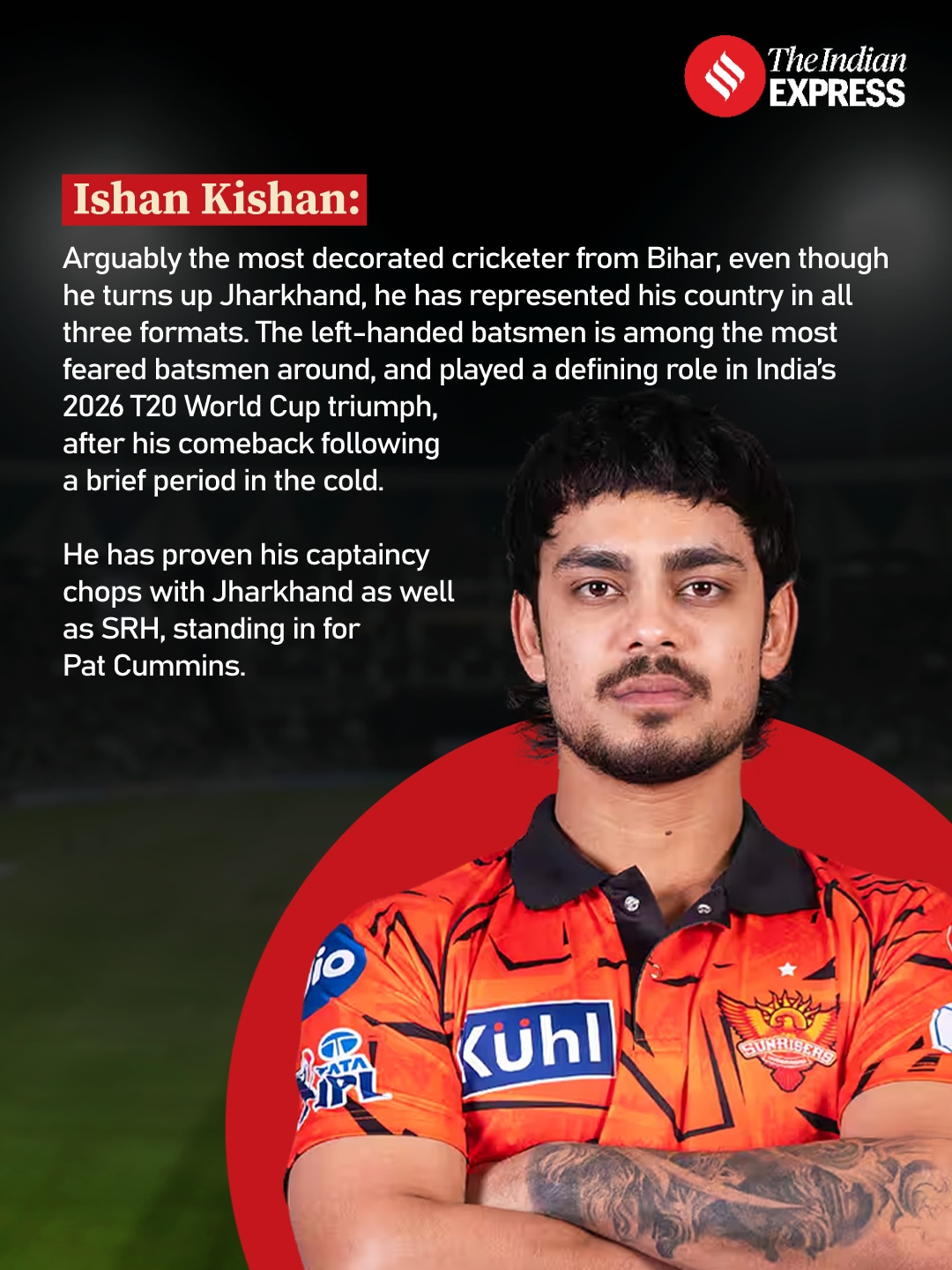 Ishan Kishan
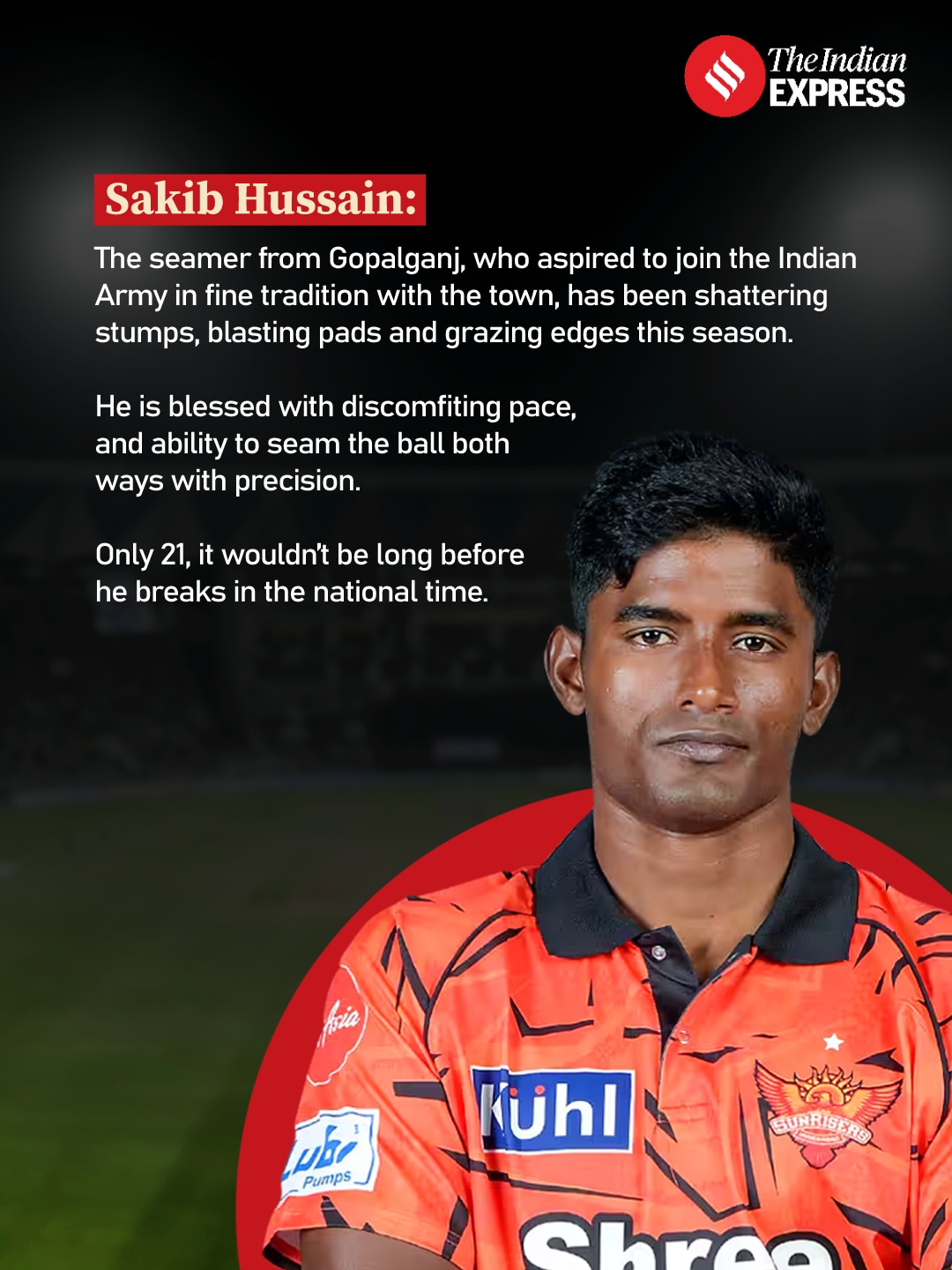 Sakib Hussain
 Mukesh Kumar
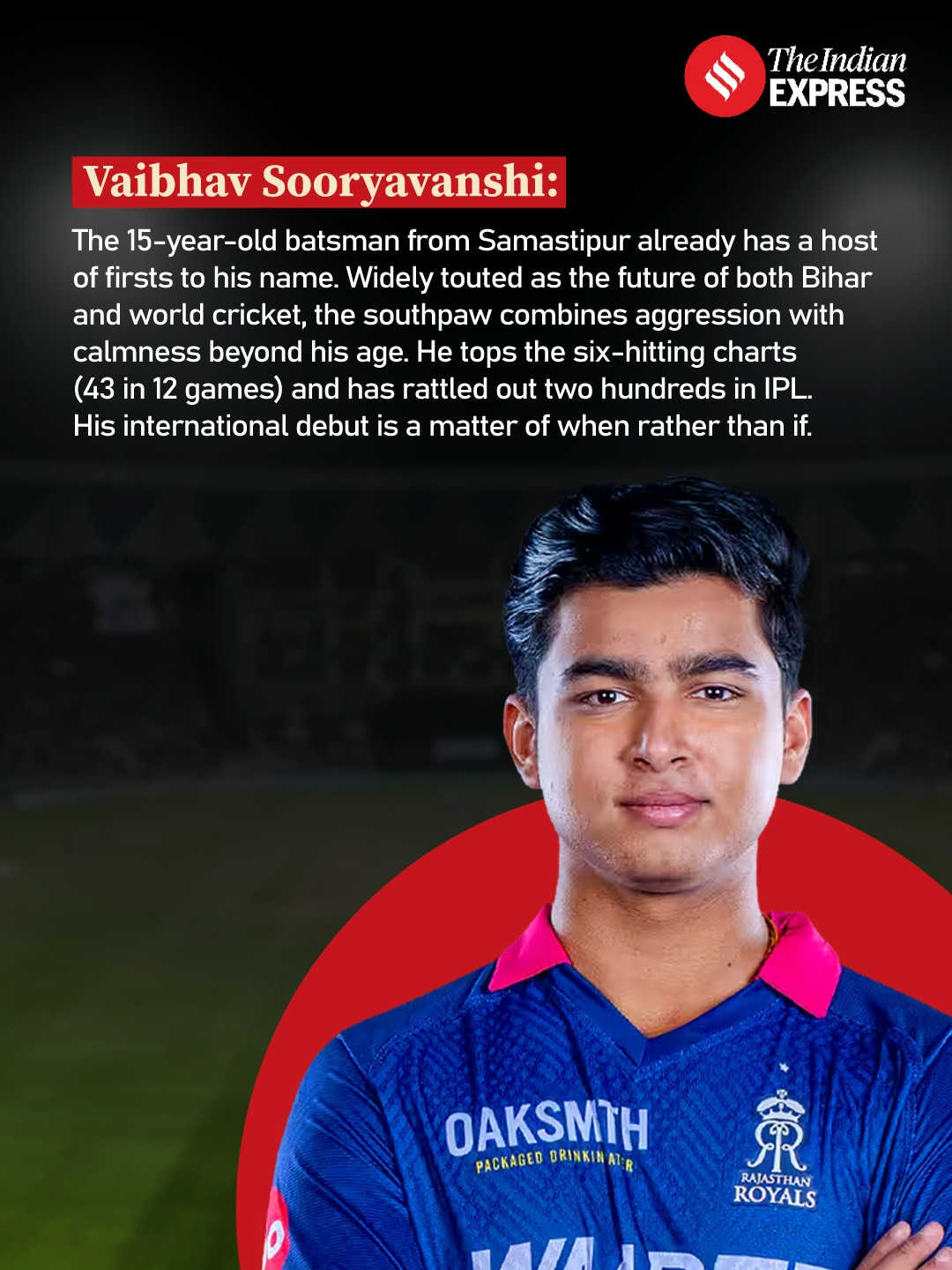 Vaibhav Sooryavanshi
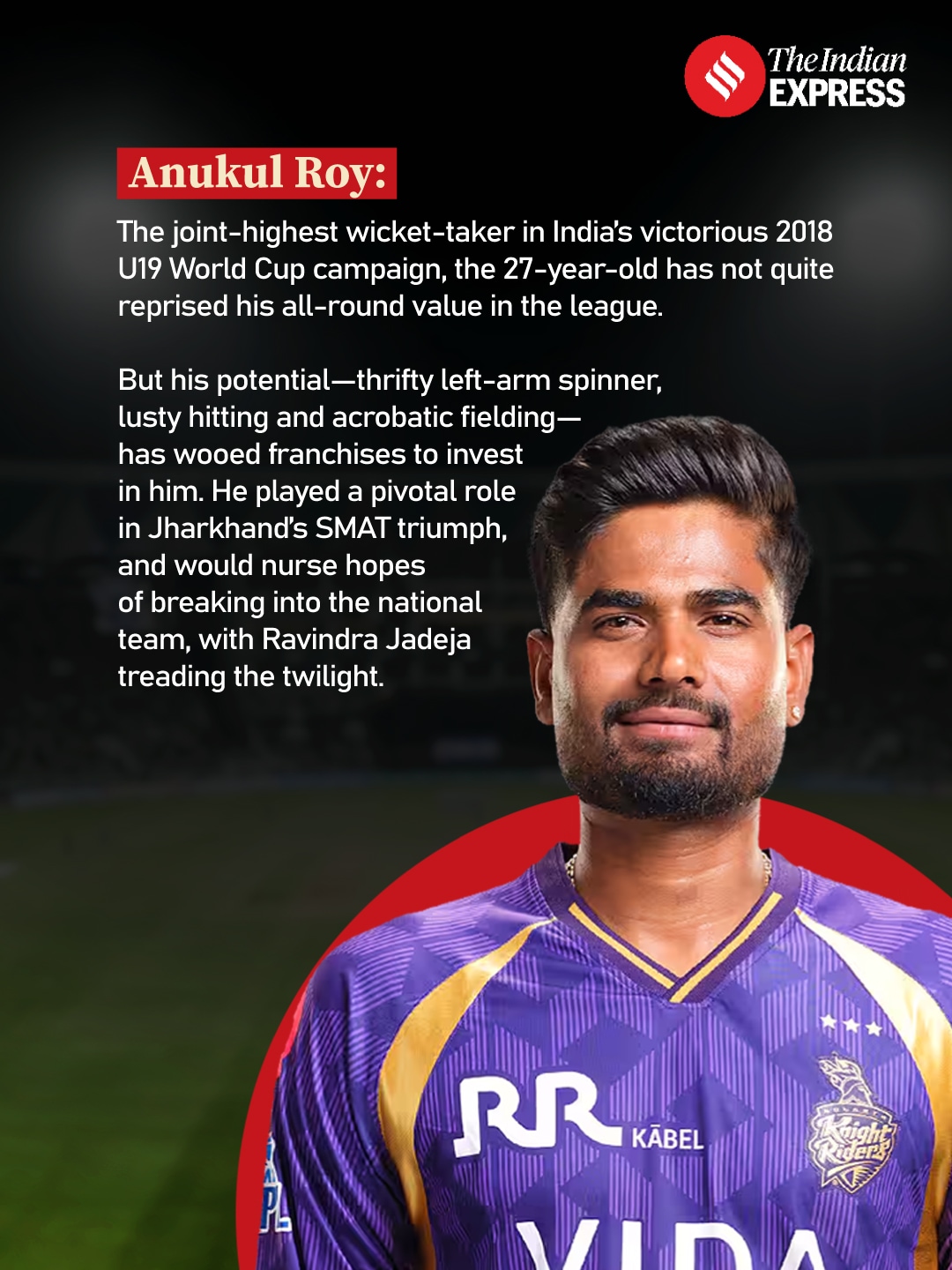 Anukul Roy
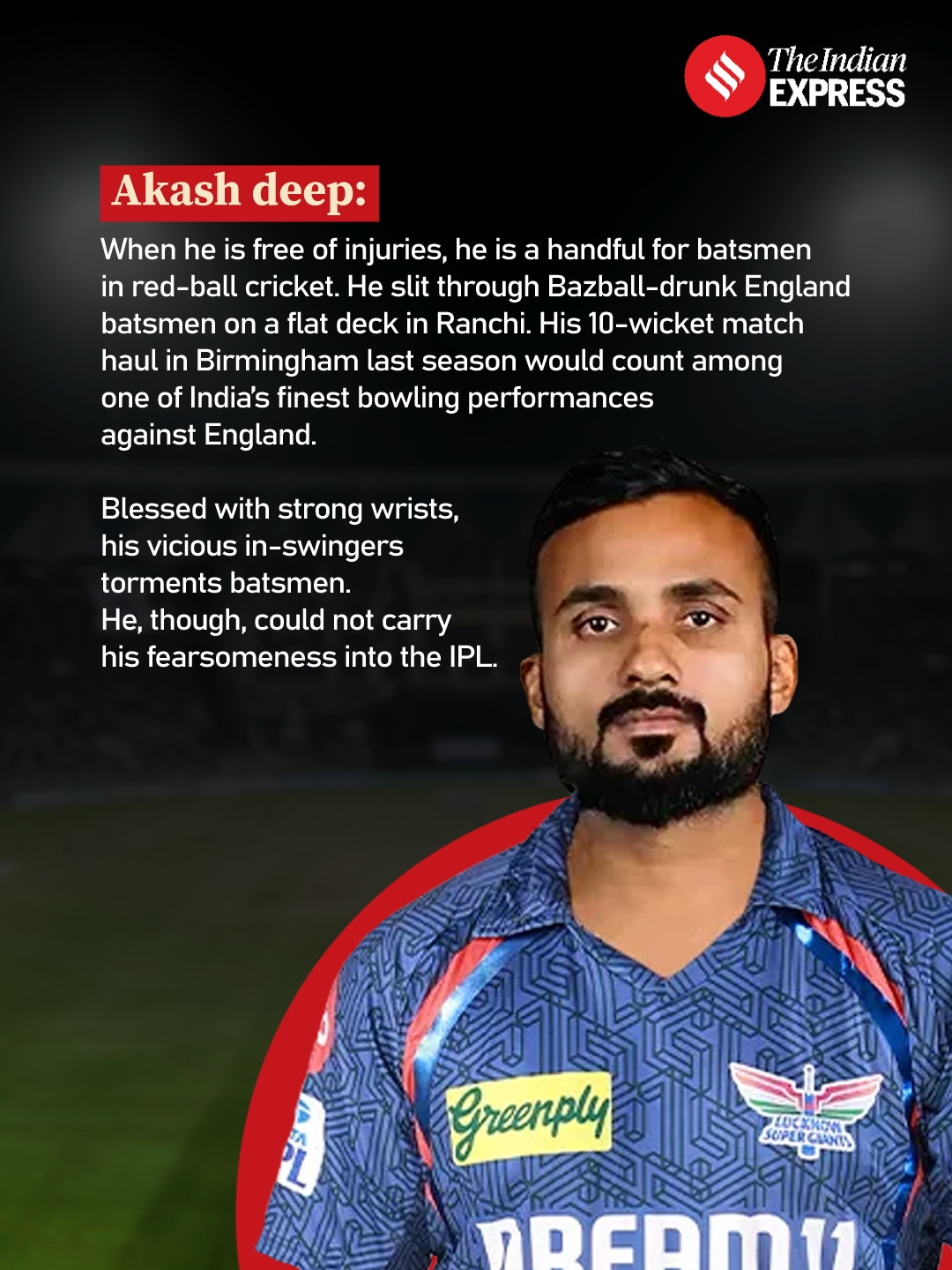 Akash Deep