The idea that political change in Belarus depends on developments in Moscow is dismissed by Sviatlana Tsikhanouskaya, the exiled Belarusian opposition leader who has led the country’s democratic movement from abroad since 2020.
“Many people think that without changes in Russia, changes cannot come to Belarus. I think that we have to reverse this perception,” Tsikhanouskaya told Euractiv.
She argues that transformation in Belarus, alongside a Ukrainian victory, could instead catalyse change in Russia, in an echo of 1989 when democratic movements in Eastern Europe triggered the Soviet Union’s collapse.
“Society in Belarus is more consolidated – we are pro-European, pro-democratic, and it’s easier to help Belarusians to win our country back. I remember in 2020 our uprising inspired an uprising in Russia as well, so it can be the same,” she added.
Her remarks come as Belarus President Alexander Lukashenko remains closely aligned with the Kremlin, following Russia’s invasion of Ukraine, which has deepened Minsk’s political and economic dependence on Moscow. According to Tsikhanouskaya, Lukashenko’s grip on power is waning.
“He is selling our independence in exchange for his personal power,” she said.
Euractiv catches Tsikhanouskaya en route between meetings in Warsaw and Berlin. Since 2020, she has led an opposition government in exile. The same year, she ran in the country’s presidential election in lieu of her husband, Syarhei Tsikhanouski, who had been jailed alongside other opposition leaders and was released last year.
When incumbent Lukashenko couped the election in his own favour, Tsikhanouskaya fled the country and has since lived in Vilnius, Lithuania. Just recently, in February – after Lithuania downgraded her protection status – Tsikhanouskaya moved to Warsaw to keep an around-the-clock security detail. She maintains offices in both cities.
Although the civic space in Belarus has shrunk since the 2020 election, Tsikhanouskaya still believe that change could come from within the country thanks to partisan groups. She said there might be “a window of opportunity, when people in the country might be more effective than those who are in exile.”
“I don’t like it when Belarusian people are divided into those who work from exile and those who work from inside the country. We are a nation,” she said.
The threat from within
Speaking ahead of Hungary’s elections, she said the vote would have implications beyond the country’s borders. Budapest will head to the polls on 12 April, after an electoral campaign characterised by disinformation, AI-generated smear tactics, and pressure on independent media.
The vote also comes amid growing scrutiny of Hungarian Foreign Minister Péter Szijjártó’s reported contacts with his Russian counterpart, Sergei Lavrov, during EU summits.
Still, Tsikhanouskaya said she retains faith in Hungarian democracy. “I’m jealous,” she said. “Hungarians can use their voice… It’s truly luxurious not to know who will be the winner of the elections.”
Although a thorn in the side of many in Brussels, Tsikhanouskaya said she would be happy to work with any leader in Budapest.
Szijjártó accused of ‘treason’ over close Russia ties by Hungary’s opposition
The role of Viktor Orbán’s government as “bag carrier” for Russia amounts to treason, Peter…
3 minutes

Hungary has held up both new sanctions on Russia and Tsikhanouskaya’s native Belarus, as well as a €90 billion loan to Ukraine. Budapest has insisted that Ukraine should repair the damaged Druzhba pipeline, which delivers Russian oil to neighbouring Hungary and Slovakia.
For weeks, Ukrainian authorities have not allowed an EU inspection mission to access the pipeline – sparking unease amongst officials in Brussels. Nonetheless, Tsikhanouskaya is sympathetic to Ukraine’s hold-up.
“What is important here is not to fall into Russia’s trap. Putin’s strategy is always to divide – to split the EU, to create tensions between Ukraine and its European partners,” she said. “Ukraine is at war, and every decision it takes is guided by its security interests.”
Let Trump be Trump
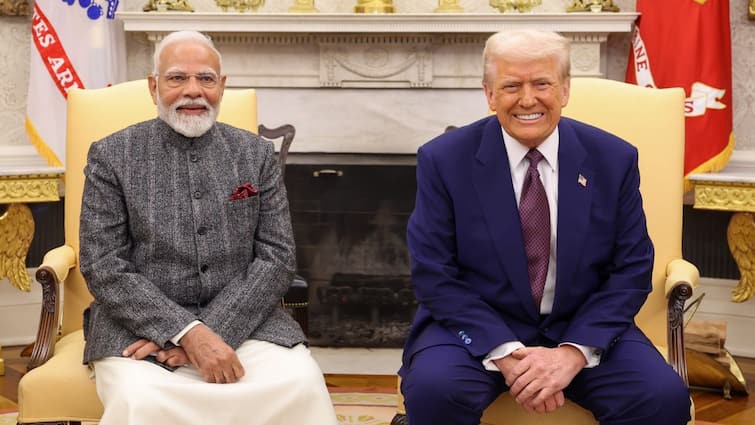
Last month, Donald Trump’s envoy to Belarus, John Coale, announced that the US would lift sanctions on two state banks, the finance ministry, and major potash producers. In return, 250 political prisoners will be released.
Tsikhanouskaya said that even if Washington lifts sanctions, European measures remain an important safeguard. She stressed that EU sanctions are crucial for driving systemic change in Belarus, urging European partners not to mirror Trump’s approach. “Keep your sanctions strong,” she said.
“I do think that Trump has enough power to free all political prisoners himself,” she added. “He has leverage, and Lukashenko is afraid of him. There is no necessity to copycat President Trump’s approach in negotiations. It can work only with Trump. So let Trump be Trump.”
(bw, mm)